Dental Crowns Explained: Types, Procedure Steps & What to Expect During Treatment

Published
A dental crown is a cap that fits over a damaged or weakened tooth, restoring its shape, strength, and function. If your dentist has recommended one, understanding what's involved makes the whole process less stressful and helps you ask better questions before you sit in the chair.
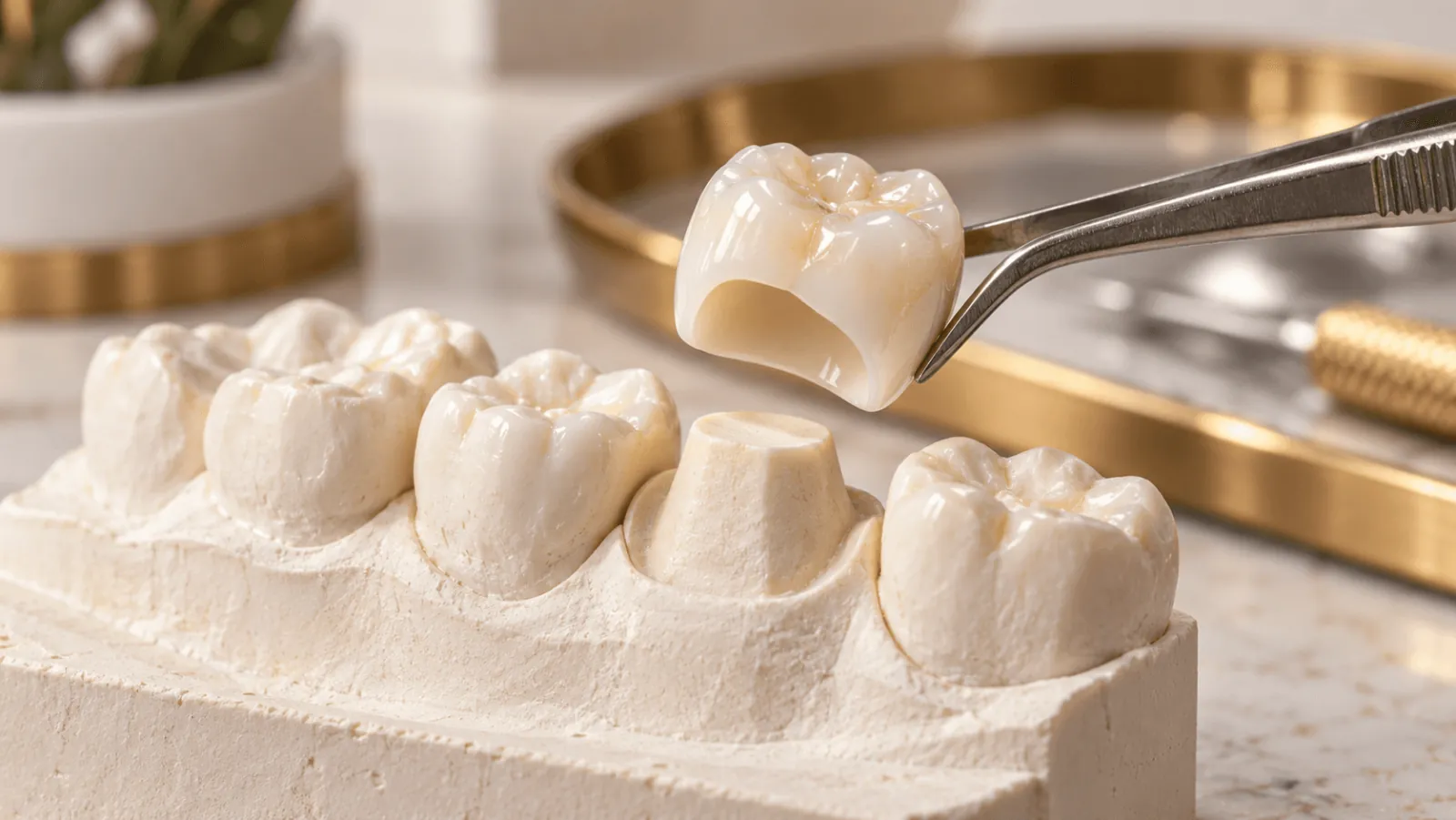
What Is a Dental Crown and Why Would You Need One?
A crown covers the entire visible part of a tooth, from the gumline up. Dentists recommend them for several clear reasons: a tooth has cracked and is at risk of splitting further, a large filling has taken up more space than what’s left of the natural tooth, a tooth has been ground down significantly over the years, or a tooth has just had a root canal and needs protection from fracture.
If you're wondering whether you really need one, that's a fair question. The honest answer is that a crown is usually recommended when simpler fixes won't hold. A small chip can be bonded. A small cavity gets a filling. But when the structural damage reaches a certain point, a crown is the only option that will last. Skipping it often means losing the tooth entirely within a few years, which costs more and creates bigger problems.
Types of Dental Crowns: Materials, Costs & Which Is Best for You
Crown materials vary in strength, appearance, and price. The right choice depends on where the tooth sits in your mouth, how hard you bite, and what matters most to you.
Porcelain Crowns
Porcelain crowns match the color and light of natural teeth more closely than any other material, which is why they're the standard choice for front teeth. They're made entirely of ceramic with no metal underneath, so there's no dark line at the gumline and no gray showing through. The trade-off is that porcelain can chip under heavy pressure, making it less ideal for molars. Cost typically ranges from $800 to $2,000 per tooth, and most dental insurance plans cover a portion when the crown is medically necessary.
Porcelain-Fused-to-Metal (PFM) Crowns
PFM crowns have a metal shell underneath with porcelain fused over the top. This gives them more strength than an all-porcelain crown while still looking tooth-colored. The well-known downside is the thin dark line that appears at the gumline when gums recede over time, which can make the crown look less natural. These were the most common type for decades, but zirconia has largely replaced them in modern dental offices. Costs fall in a similar range to porcelain, typically $800 to $1,800.
Gold and Metal Alloy Crowns
Gold and metal alloy crowns are the most durable option available. They rarely chip or crack, they seal tightly to the tooth, and they're gentle on the opposing teeth you bite against, since metal flexes slightly rather than grinding enamel down. The obvious limitation is appearance. They're gold or silver-colored, so most patients only accept them on back molars where they're hard to see. Despite looking less refined, they often cost as much as porcelain options, ranging from $800 to $2,500, because of the materials involved and how long they last.
Zirconia Crowns
Zirconia is a ceramic material that's both strong enough for heavy chewing and natural-looking enough for visible teeth. It's become the top recommendation for back teeth in many dental offices. Dr. Marina Rubinshtein recommends solid zirconia for back teeth specifically because molars take the most force, and that's where crown fractures happen most often. Zirconia holds up without the chipping risk that comes with standard porcelain. These crowns tend to cost more, often between $1,000 and $2,500, but their durability makes them a practical choice for teeth that do serious work.
The Dental Crown Procedure: Step-by-Step Walkthrough
Most dental crown procedures take two separate visits spaced two to three weeks apart. Some offices now offer same-day crowns, which changes that timeline considerably.
First Visit: Tooth Preparation and Temporary Crown
The dentist starts by numbing the area around the tooth. Once you're numb, they file the tooth down on all sides to make room for the crown. You won't feel pain, but you'll hear the drilling and feel pressure, which some people find uncomfortable. After shaping the tooth, the dentist takes either a traditional mold or a digital scan, and selects a shade that matches your surrounding teeth. A temporary crown is then placed over the filed tooth to protect it until your permanent crown is ready. This visit usually runs 60 to 90 minutes.
Between Visits: Living with a Temporary Crown
The two to three weeks with a temporary crown require a little care. The temporary is held on with weaker cement by design so the dentist can remove it at the next visit, which means it's not as secure as the final crown. Sticky foods are the biggest risk. Chewing caramel, taffy, or even chewy bread on that side can pull the temporary crown right off. Vigorous flossing can do the same, so floss gently around that tooth and lift the floss out sideways rather than snapping it up through the contact. If the temporary does come off, it's not an emergency, but call your dentist promptly so they can recement it and keep the tooth protected.
Second Visit: Permanent Crown Placement
At the second appointment, the dentist removes the temporary crown, cleans the tooth, and tries in the permanent crown to check the fit, bite, and color. Minor adjustments are made before cementing. This visit is quicker than the first, usually 30 to 45 minutes, and often requires little to no numbing. The crown may feel slightly different when you bite down for the first few days, but that sensation settles as your mouth adjusts.
Same-Day Crowns: How CEREC Technology Works
Offices with CEREC technology can design and mill a crown in a single visit. The dentist takes a digital scan of the prepared tooth, software designs the crown on screen, and a milling machine carves it from a ceramic block while you wait. The full process takes two to three hours. The convenience is real, but it's worth asking your dentist what materials are available with their specific machine, since some offices have fewer options than a full dental lab can provide.
Does Getting a Dental Crown Hurt?
The procedure itself shouldn't be painful because the tooth and surrounding tissue are numbed. What many patients notice is the sound of drilling, the pressure on the tooth, and the length of time they have to keep their mouth open. After the numbing wears off, mild soreness around the injection site is common for a day or two. Some people experience sensitivity to cold that can last several weeks as the tooth settles under its new crown. Over-the-counter pain relievers handle most post-appointment discomfort without issue.
How Long Do Dental Crowns Last?
Most dental crowns last between 10 and 15 years, though some hold up for 25 years or more with good care. The margin where the crown meets the tooth is the most vulnerable spot, since bacteria can work their way in and cause decay underneath. Grinding and clenching wear crowns down faster, particularly on back teeth. The habits that extend crown life are straightforward: brush and floss daily, wear a nightguard if you grind at night, avoid chewing ice or hard objects like pen caps, and keep up with regular checkups so your dentist can catch any problems early.
Dental Crown Costs: Price Ranges and Insurance Coverage
Crown costs vary based on the material, the dentist's location, and how complex the prep work is. Porcelain and zirconia crowns generally run between $800 and $3,000 per tooth, with most falling in the $1,000 to $1,500 range. Gold crowns sit in a similar price band despite the material difference.
Dental insurance typically covers 50% of crown costs when the procedure is considered medically necessary, after your deductible is met. What surprises some patients is that additional work billed separately, such as a buildup to replace missing tooth structure before placing the crown, can add $150 to $350 to the bill. Ask your dentist to walk through the full cost estimate before the first appointment. If the out-of-pocket amount is a barrier, dental schools and discount dental plans can reduce costs significantly.
Caring for Your Dental Crown: Do's and Don'ts
Crowned teeth need the same daily care as natural teeth. Brush twice a day and floss at the gumline every day, paying close attention to where the crown edge meets the tooth. That junction is where plaque builds up and where decay can start, even under an existing crown.
Avoid chewing ice, biting into hard candy, or using your teeth to tear open packages. Sticky foods like caramel and gummy candy can work a crown loose over time. If you grind your teeth at night, wearing a nightguard protects both the crown and the opposing teeth from wearing each other down prematurely.
Potential Problems and When to Call Your Dentist
Some post-crown symptoms are normal. Others signal a problem worth addressing:
A crown that feels loose or shifts when you press on it means the cement may have failed. Call your dentist to have it recemped before bacteria get underneath.
Sharp pain when biting could mean the crown is sitting too high and hitting your opposing tooth first. This is an easy fix at a quick adjustment visit.
Sensitivity that doesn't fade after three to four weeks may indicate the nerve is irritated and needs evaluation. In some cases, a root canal becomes necessary after crown prep, though this isn't common.
A crown that falls off completely needs same-day or next-day attention. Save the crown, protect the filed tooth with pharmacy dental cement if possible, and call your dentist.
Dark lines or visible decay at the crown edge warrant a checkup. Caught early, decay at the margin can sometimes be repaired without replacing the whole crown.
A dental crown is one of the most reliable ways to save a tooth that would otherwise be at risk of breaking or being lost entirely. With the right material choice and good daily care, a well-placed crown can protect your tooth for 15 years or more.