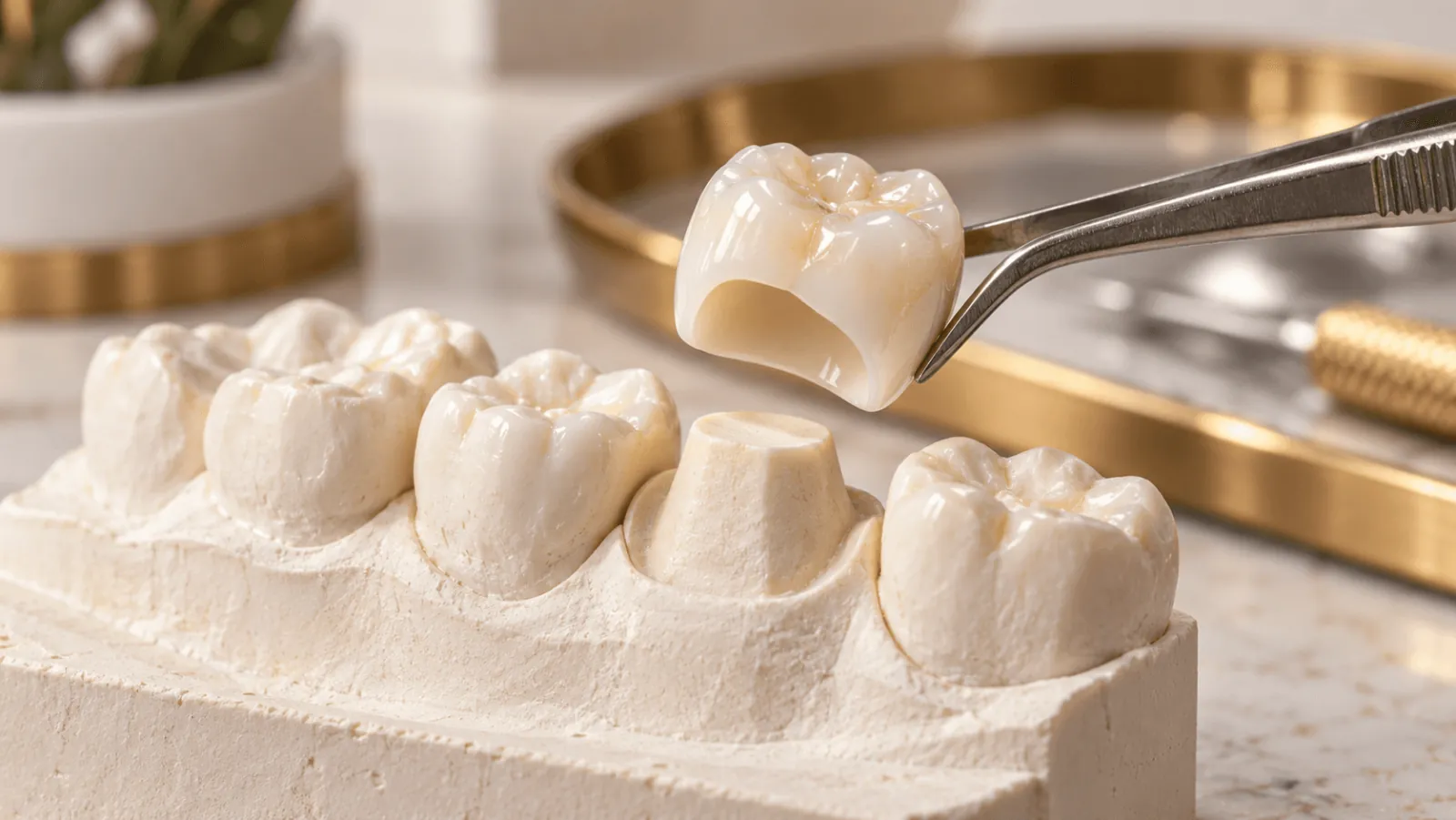
Porcelain Veneers vs Composite Veneers: Which Option Is Right for Your Smile?

Published
Choosing between porcelain veneers vs composite veneers comes down to three things: how much you want to spend, how long you want results to last, and how natural you need them to look. Both options can improve your smile significantly, but they work differently, cost differently, and hold up differently over time. Understanding those differences before you sit in the chair makes the whole process easier.
What Are Porcelain Veneers and Composite Veneers?
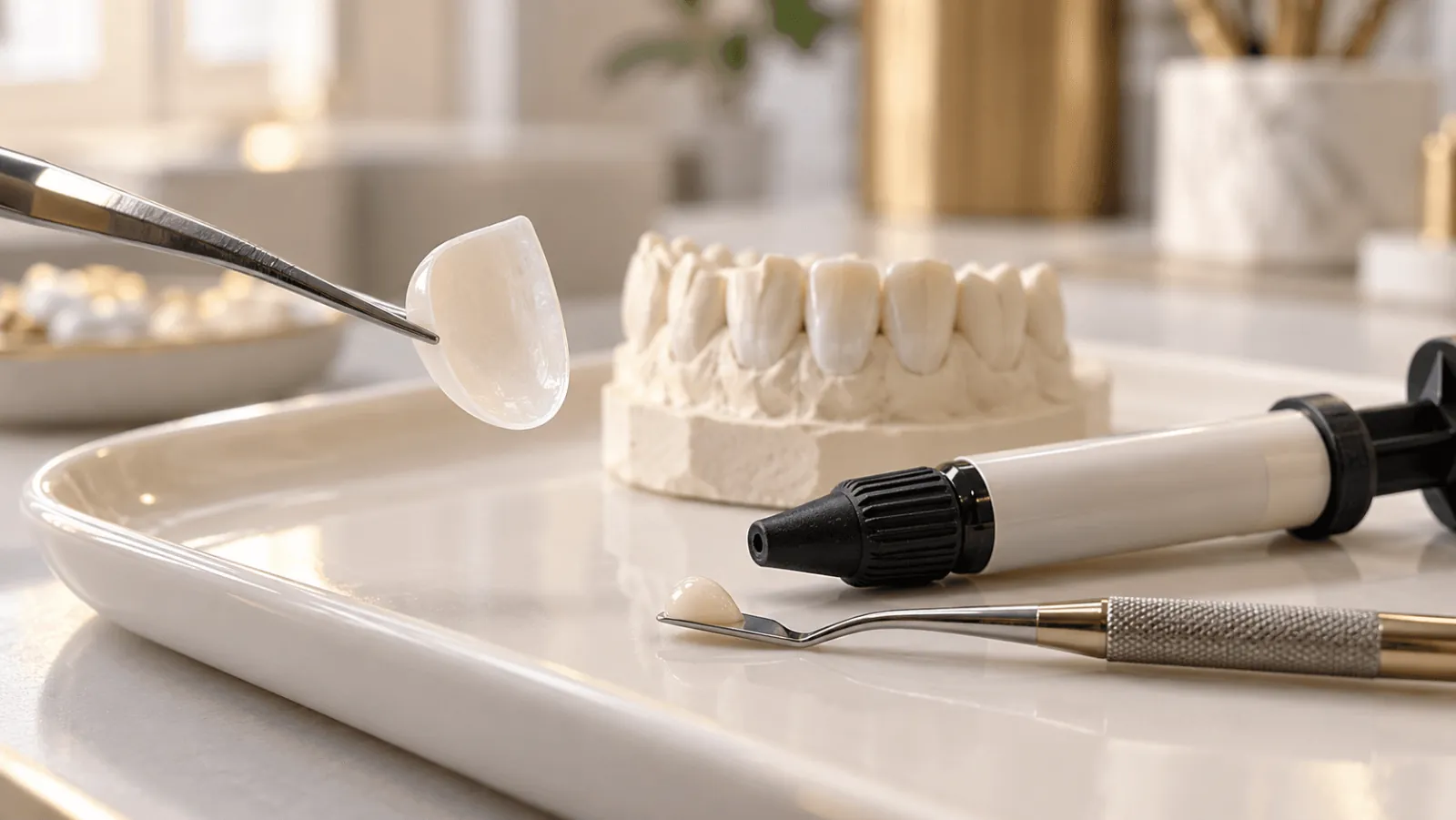
Veneers are thin shells bonded to the front surface of your teeth to improve their shape, color, or size. They don't replace your teeth — they cover them, the way a false nail covers a fingernail.
The difference between the two types starts with the material. Porcelain veneers are made from ceramic in a dental lab, custom-built from impressions of your teeth, then bonded on at a follow-up visit. Composite veneers are made from a tooth-colored resin, the same material used in most white fillings, that your dentist applies and shapes directly in the office during a single appointment.
Both types address the same concerns: chipped teeth, gaps, staining that won't respond to whitening, and teeth that are slightly uneven or worn. The path to getting them, and what you get at the end, is where things diverge.
The Main Differences Between Porcelain and Composite Veneers
When patients compare porcelain veneers vs composite veneers, they're really comparing four things: how they're made, how long they last, how they look, and what the process involves.
Material and Durability
Porcelain is a harder, denser material than composite resin. It resists staining from coffee, tea, red wine, and smoking much better, and it holds its polish longer. Porcelain veneers typically last 10 to 15 years with proper care. Composite veneers usually last 5 to 7 years before they need significant touch-ups or replacement.
Composite resin is more porous than porcelain, which means it can absorb pigment over time. It won't stain as fast as natural enamel, but it will need more frequent polishing and may dull sooner than porcelain would.
Appearance and Aesthetics
Porcelain reflects light in a way that closely mimics natural tooth enamel. It has a slight depth and translucency — meaning light passes through it at the edges — that makes it look very real, even under close inspection. Composite can look excellent, particularly right after placement, but it doesn't replicate that same depth. In good lighting or up close, the difference is noticeable to a trained eye.
Both types can be color-matched to your surrounding teeth or brightened to your preferred shade. For patients whose main goal is a significant aesthetic upgrade that looks completely natural, porcelain is the stronger option.
Application Process and Time Commitment
Getting porcelain veneers takes at least two visits. At the first appointment, your dentist removes a thin layer of enamel from each tooth, takes impressions, and fits you with temporary veneers while the lab builds your permanent set. That process takes one to two weeks. At the second visit, the permanent veneers are bonded on.
Composite veneers can be completed in a single appointment. Your dentist applies the resin in layers, shapes it, and hardens each layer with a curing light. There's no lab involved and no waiting period. For patients who need results quickly or want to avoid multiple visits, this is a real advantage.
Cost Comparison: What You'll Actually Pay
Cost is usually where the porcelain veneers vs composite veneers decision gets made. Porcelain veneers run $1,000 to $2,500 per tooth. Composite veneers typically cost $250 to $1,500 per tooth. The gap exists because porcelain requires lab work, more chair time, and more technical skill to place.
Most patients don't get just one veneer. A typical treatment covers six to eight front teeth, the ones visible when you smile. At those volumes, the total cost for porcelain can easily reach $8,000 to $20,000. Composite for the same number of teeth might run $2,000 to $9,000.
The lower upfront cost of composite doesn't always mean cheaper over time. If composite veneers need replacing every six years while porcelain lasts 15, you could end up paying more for composite across a decade. Factor in replacement costs when you're doing the math.
For a closer look at how per-tooth pricing breaks down, see how much veneers cost per tooth.
Pros and Cons of Porcelain Veneers
Advantages of porcelain:
Lifespan of 10 to 15 years with proper care, meaning fewer replacements over time.
Strong resistance to staining from food, drink, and tobacco.
The most natural-looking result available, with a translucency that closely matches real enamel.
Hard surface that stands up well to daily biting and chewing.
Disadvantages to consider:
Higher upfront cost, often $1,000 or more per tooth compared to composite.
Tooth preparation is permanent — removing enamel can't be undone, so you'll always need veneers on those teeth.
The process takes multiple visits and a lab waiting period.
Porcelain can chip under heavy pressure, especially if you grind your teeth at night.
Pros and Cons of Composite Veneers
Advantages of composite:
Lower cost, often less than half the price of porcelain per tooth.
Completed in one visit with no lab time required.
Less tooth removal needed, and in some cases the process can be reversed.
Easier and cheaper to repair if a veneer chips or cracks.
Limitations to be aware of:
Shorter lifespan — 5 to 7 years before replacement or significant touch-ups are needed.
More prone to staining over time, especially from coffee, red wine, and tobacco.
Doesn't replicate the light-reflecting quality of natural enamel as closely as porcelain.
Needs regular polishing to maintain its appearance.
A fuller breakdown of these trade-offs, including what dentists don't always volunteer during a consultation, is covered in dental veneers pros and cons.
Which Type of Veneer Lasts Longer?
Porcelain veneers last roughly twice as long as composite ones. Over a 15-year span, you might replace composite veneers two or three times while a single set of porcelain would still be in place. Each replacement adds cost, chair time, and additional tooth preparation.
Habits play a significant role in how long either type lasts. Grinding your teeth at night — a condition called bruxism — puts excess pressure on veneers and shortens their life. Wearing a night guard helps. Avoiding biting into hard foods like ice, hard candy, or uncut raw carrots protects both types. Good oral hygiene extends the life of composite in particular, since plaque buildup around the edges accelerates staining and wear.
Are Veneers Covered by Dental Insurance?
Most dental insurance plans classify veneers as cosmetic procedures and won't cover them. The exception is when veneers are placed to restore function or structure after trauma, severe decay, or a developmental condition — in those cases, partial coverage is sometimes possible, but it's not common.
Most patients pay entirely out of pocket. Many dental offices offer in-house financing or work with third-party plans that let you spread payments over 12 to 24 months. It's worth asking about payment options at your first visit, since the total cost for multiple veneers adds up quickly.
How to Decide Which Veneer Type Is Right for You
There's no single right answer to the porcelain veneers vs composite veneers question. The best choice depends on your specific situation.
If your budget is limited and you want results quickly, composite veneers offer real value. If you want the most durable, natural-looking outcome and you're comfortable with the higher cost and longer process, porcelain is the stronger long-term choice. "The biggest thing is if you want something that will last you for a long time and look beautiful for many years, then you go with porcelain, but it is more expensive," says Dr. Marina Rubinshtein.
Also consider how many teeth need treatment, whether you grind your teeth, and how often you drink coffee or wine. Patients with very crooked teeth may need to address alignment first, since placing veneers on severely misaligned teeth requires heavy enamel removal and can lead to sensitivity or the need for root canal treatment. In those cases, braces or aligners followed by whitening may give better results than veneers alone.
Questions to Ask Your Dentist Before Getting Veneers
Walking into a veneer consultation with the right questions saves time and prevents surprises:
How many veneers do I actually need for the result I want?
What will my total cost be for placement and any follow-up care?
Based on my teeth, do you recommend porcelain or composite?
Can I see before-and-after photos from patients with similar starting points?
What happens if a veneer chips or breaks — what does repair or replacement cost?
Do I grind my teeth, and if so, how does that affect your recommendation?
These questions give your dentist the information needed to give you specific advice rather than general options.
The choice between porcelain veneers vs composite veneers isn't about which option is better in general — it's about which one fits your goals, your timeline, and your budget. A conversation with your dentist, using the right questions, will get you to a clear answer faster than any comparison article can.