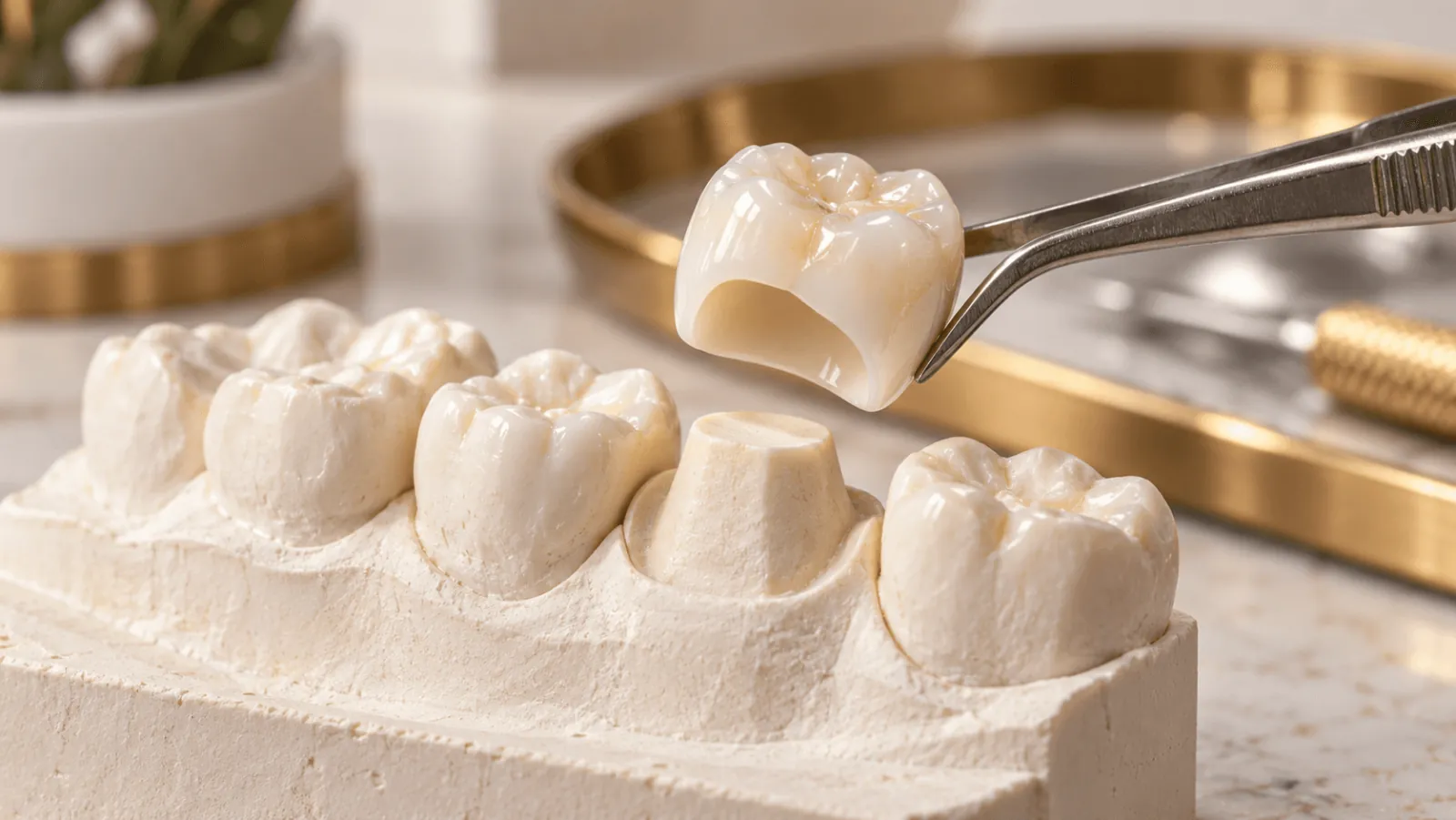
Snap-On Veneers vs Traditional Veneers: Cost, Durability & Results Compared

Published
Snap-on veneers and traditional veneers both promise a better-looking smile, but they work in completely different ways and deliver very different results. One is a removable cover you can take out before bed; the other is a permanent shell bonded directly to your tooth. Knowing the difference before you spend a dollar could save you from a decision you can't undo.

What Are Snap-On Veneers and How Do They Work?
Snap-on veneers, sometimes called clip-on veneers, are thin covers made from resin that fit over your existing teeth the way a retainer fits over your mouth. You don't need drilling, injections, or enamel removal to get them. Some companies send you an at-home impression kit so you can make a mold of your teeth and mail it back. Others are fitted directly by a dentist, which tends to produce better results.
The main appeal is obvious: you get a whiter, more even smile without any permanent changes to your natural teeth. For someone who's nervous about commitment or working with a limited budget, that sounds like an easy win. The reality is more complicated, as we'll cover throughout this guide. Still, as a temporary cosmetic solution, snap-on veneers serve a real purpose for the right patient.
What Are Traditional Veneers and How Are They Applied?
Traditional veneers are thin shells, usually made from porcelain or composite resin, that are permanently bonded to the front surface of your teeth. Getting them takes two to three visits. During the first, a dentist shaves down a thin layer of enamel, takes impressions, and places temporary veneers while the permanent ones are made in a lab. At the second visit, the custom shells are bonded into place.
The key word here is permanent. Once enamel is removed, it doesn't grow back, so you'll always need veneers on those teeth. Before any prep work begins, the dentist should walk you through exactly which teeth will be shaped and how much structure will be removed. At Bensonhurst Dental Care, Dr. Marina Rubinshtein uses a trial smile to show patients precisely where and how their teeth will be prepared before a single instrument touches them, giving patients a clear picture of the process before they commit.
For a deeper look at this trade-off, see dental veneers pros and cons.
Cost Comparison: What You'll Actually Pay for Each Option
The price gap between these two options is significant. Snap-on veneers typically run between $300 and $2,000 for a full set, depending on whether you go through a direct-to-consumer brand or have a dentist fit them. Traditional veneers cost between $800 and $2,500 per tooth, and most patients get eight to ten veneers across their upper teeth for a natural-looking result, which puts a full set between $10,000 and $25,000 or more. For a closer per-tooth breakdown, see how much veneers cost per tooth.
Insurance rarely covers either option since both are considered cosmetic. Hidden costs are worth watching for on both sides. With snap-ons, you may need to replace them every year or two. With traditional veneers, you might need replacements after ten to fifteen years, and any cracking or chipping in the meantime comes out of pocket.
Are Payment Plans or Financing Available?
Most dental offices that offer traditional veneers provide in-house payment plans or accept CareCredit, a financing card designed for healthcare costs. Monthly payments through CareCredit can spread a $10,000 treatment across one to five years, though interest rates vary depending on the plan you choose.
Many snap-on veneer companies also offer installment options at checkout, sometimes breaking a $1,500 set into monthly payments under $100. Just read the terms carefully, since some plans carry high interest if you don't pay the balance in full during the promotional period.
Durability and Lifespan: How Long Does Each Type Last?
Snap-on veneers typically last one to five years, depending on how often you wear them and how well you clean them. The resin material scratches and stains over time, and the fit can loosen as it wears down. Dropping them, biting into hard foods while wearing them, or storing them dry can shorten their lifespan significantly.
Traditional porcelain veneers, by contrast, can last ten to twenty years with proper care. Composite veneers tend to wear faster, usually five to seven years. What causes traditional veneers to fail includes grinding your teeth at night without a mouthguard, biting hard objects like ice or fingernails, and decay forming at the edges of the veneer where it meets the gumline. Neither option is lifetime-proof, but the gap in durability between the two is substantial.
Appearance and Results: Which Looks More Natural?
Traditional veneers look more natural. They're custom-made to match the shape, size, and color of your surrounding teeth, and porcelain reflects light in a way that closely mimics real enamel. When made well and fitted correctly, they're nearly impossible to detect.
Snap-on veneers are a different story. Because they sit over your existing teeth rather than replacing the outer surface, they add bulk. This can make your smile look thicker, wider, or oddly uniform, which is where the "chiclet" look comes from. One patient who came into Dr. Marina Rubinshtein's office wearing a snap-on smile she'd bought online looked, in Dr. Marina Rubinshtein's words, "like a horse" because of how bulky the fit was. Quality varies widely by brand, and snap-ons work best when the patient already has minor gaps or missing teeth the cover can help fill in.
Can People Tell You're Wearing Them?
Well-made traditional veneers are essentially undetectable. Even people who know what to look for often can't tell the difference between a veneer and a natural tooth. Snap-on veneers are more noticeable, particularly in conversation or photos. The thickness adds visible bulk along the gumline, and the way they fit can shift slightly when you speak. Some brands are better than others, but none currently match the seamless look of a custom porcelain veneer.
Comfort and Daily Life: Eating, Speaking, and Wearing
Most snap-on veneer manufacturers recommend removing them before eating, and most dentists agree. Chewing with them in can crack the resin or force food underneath, where bacteria then sit against your teeth. Some brands claim their veneers can handle soft foods, but regularly eating with them in will shorten how long they last.
Speaking with snap-ons takes an adjustment period of a few days. The added plastic thickness changes how your tongue moves against your teeth, which can produce a slight lisp or muffled sound. Traditional veneers don't carry this problem to the same degree. Once the initial adjustment period passes, most patients speak and eat normally, with no noticeable difference from their original teeth.
Oral Health Impact: Which Is Better for Your Teeth?
Snap-on veneers don't require removing any tooth structure, which is a genuine advantage. Your natural teeth stay completely intact underneath. The risk comes from wearing them. Bacteria and food particles can get trapped between the veneer and your tooth surface, and if you're not cleaning both the veneer and your teeth thoroughly every day, decay and gum irritation can develop underneath without you noticing until it becomes a bigger problem.
Traditional veneers require removing enamel, which is a real and permanent change to your tooth. However, once the veneer is bonded, it protects the remaining tooth surface from daily wear and exposure. Keeping the gumline clean and visiting your dentist regularly are the most important factors in maintaining healthy teeth under traditional veneers over the long term.
Who Is Each Option Best For?
Snap-on veneers make the most sense for patients who want a temporary cosmetic fix, aren't ready for permanent changes, or are working with a tight budget. They can also work as a stop-gap while saving for traditional veneers, or for someone who has missing teeth and wants a fuller smile for occasional events.
Traditional veneers are the better fit for patients who:
Have chipped, cracked, or severely discolored teeth that whitening can't fix
Want a permanent result they don't have to think about daily
Are prepared to invest in a long-term solution and understand the enamel removal involved
Have realistic expectations about upkeep and replacements over time
Dr. Marina Rubinshtein's team always starts with two questions: Do you want something that lasts, or are you looking for a quick fix you don't need to last? That single question narrows down the right path for most patients quickly.
When Neither Option Is Right
Sometimes veneers of any kind aren't the answer. Teeth that are just yellowed but otherwise healthy often respond well to professional whitening alone. Mild chips or small gaps can be repaired with dental bonding, which is faster and less expensive than veneers. Crowded or misaligned teeth may need braces or clear aligners first, since putting veneers on crooked teeth doesn't fix the underlying position.
Making Your Decision: Questions to Ask Before Choosing
Before spending money on either option, work through these practical questions:
What's driving your interest: a specific flaw, overall appearance, or a one-time event? The answer shapes which option makes sense.
How permanent are you willing to go? If the idea of enamel removal makes you hesitate, start with a reversible option.
What's your honest budget, including potential replacements over five to ten years?
If you're considering snap-ons, ask whether the company offers any guarantee and what the return or replacement policy looks like.
If you're consulting about traditional veneers, ask to see before-and-after photos of actual patients, ask what happens if a veneer chips within the first year, and ask whether the dentist uses a trial smile so you can preview the result before prep begins.
Taking time with these questions before your first appointment will make the conversation with your dentist more productive and reduce the chance of a choice you regret.
Choosing between snap-on veneers vs traditional veneers comes down to how permanent, how natural, and how long-lasting you need your results to be. A conversation with your dentist about your specific teeth and goals will always give you better guidance than any online comparison can.