Child Snoring and Sleep Apnea: Signs, Causes and What Parents Can Do

Published Updated
Many children snore now and then, especially with a cold. Loud snoring most nights is different: it can be a sign of obstructive sleep apnea, a condition in which a child’s airway narrows or closes again and again during sleep. It affects about 3 to 5 percent of otherwise healthy children and often goes unnoticed for years. Here’s what to watch for, what causes it, and how it’s diagnosed and treated.

What is sleep-disordered breathing?
Sleep-disordered breathing is a range of breathing problems during sleep. At the mild end is snoring without pauses in breathing. At the serious end is obstructive sleep apnea (OSA): the airway narrows or closes repeatedly during the night, the child works harder to breathe, and sleep is broken up.
The American Academy of Sleep Medicine (AASM) estimates that sleep apnea affects about 3 to 5 percent of otherwise healthy children and teenagers. It’s most often found between ages 3 and 6, when the tonsils and adenoids are large compared to the throat. Boys and girls are affected at about the same rate.
Signs to watch for at night
Loud snoring, often with pauses, gasps or snorts
Labored breathing; in young children the chest may pull inward as they breathe in, which isn’t normal after age 3
Restless sleep, frequent changes of position, or sleeping sitting up or with the neck stretched back
Heavy sweating during sleep
Bedwetting or sleep terrors
Breathing through the mouth
Signs during the day
Children with sleep apnea usually breathe normally when they’re awake, but many breathe through their mouth. Other signs the AASM lists include:
morning headaches;
frequent colds and upper respiratory infections;
trouble swallowing because of very large tonsils;
slower growth;
behavior and attention problems, including hyperactivity, aggressive behavior and difficulty in school.
The behavior problems can look a lot like ADHD, which is one reason a sleep evaluation matters. The American Academy of Pediatrics (AAP) found that treating sleep apnea in children improved behavior and attention.
What causes it?
The most common cause in children is enlarged tonsils and adenoids, which narrow the airway. Other risk factors the AASM lists include:
obesity;
a family member with sleep apnea;
differences in facial structure;
Down syndrome, neuromuscular diseases, cerebral palsy, sickle cell disease, and surgery to repair a cleft palate.
Where dental and oral habits fit in
Children see the dentist regularly, so a dental checkup is a good chance to notice possible signs such as mouth breathing, large tonsils or a narrow upper jaw. The American Academy of Pediatric Dentistry (AAPD) asks dentists to screen children for snoring and other sleep-related breathing problems. It also asks them to refer any child suspected of having sleep apnea to a physician for diagnosis.
Oral habits matter for the teeth, too. The ADA notes that thumb, finger or pacifier sucking that continues after the permanent teeth come in can affect how the mouth grows and how the teeth line up, and can change the roof of the mouth. Most children stop between ages 2 and 4. If you’re worried about a habit, ask your dentist.
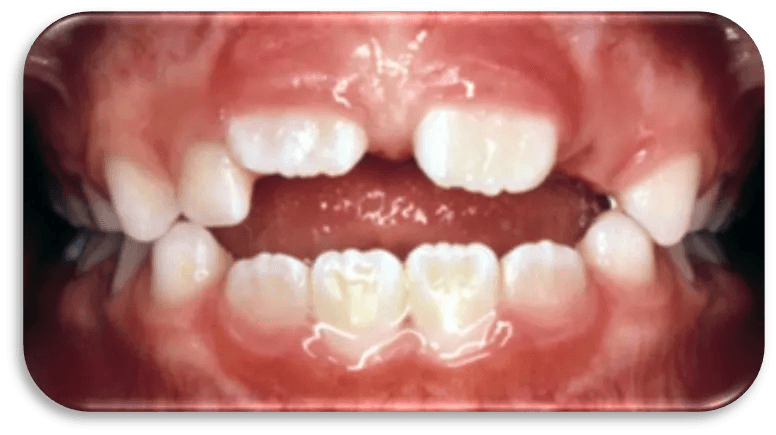
What the research doesn’t show is that these habits cause sleep apnea, or that a dental appliance on its own treats it.
How is sleep apnea diagnosed?
A physician makes the diagnosis, not a dentist. The AAP recommends that all children be screened for snoring at checkups. A child who snores and has other signs of sleep apnea should have an overnight sleep study (polysomnography). The study records breathing, heartbeat and brain waves while your child sleeps at a sleep center, with a parent staying overnight. It shows whether your child has sleep apnea and how severe it is.
How is it treated?
Your child’s doctor plans treatment based on the cause and how severe it is. The AAP guideline recommends:
Removing the tonsils and adenoids (adenotonsillectomy) as the first treatment for children with enlarged tonsils and adenoids. Some children still have sleep apnea after surgery, so a follow-up check is important.
CPAP, a mask that delivers a steady flow of air during sleep, if surgery isn’t done or sleep apnea remains afterwards.
Weight loss, alongside other treatment, for children who are overweight.
Nasal steroid sprays as an option for some children with mild sleep apnea.
What about oral appliances? Some children may benefit from an oral appliance worn during sleep, but the AASM notes that its effectiveness in children is still being studied. The AAP found too little evidence to recommend rapid maxillary expansion (widening the upper jaw). The AAPD recommends that dentists consider an appliance only after a complete orthodontic and growth assessment, working together with the child’s doctors.
What to do if you’re worried
Write down what you notice: how often your child snores, any pauses or gasps, and daytime signs like tiredness or behavior changes. A short phone video of the snoring can help the doctor.
Talk to your child’s pediatrician, who can arrange a sleep study or refer you to a sleep specialist or an ear, nose and throat (ENT) doctor.
Mention it at your child’s next dental visit. We can look for oral signs during the exam and let you know if a visit to the doctor is a good idea. See our sleep screenings.
Sleep apnea in children is common, treatable and often missed. If your child snores loudly most nights, it’s worth asking about.